

The race for regional football leadership in West Africa
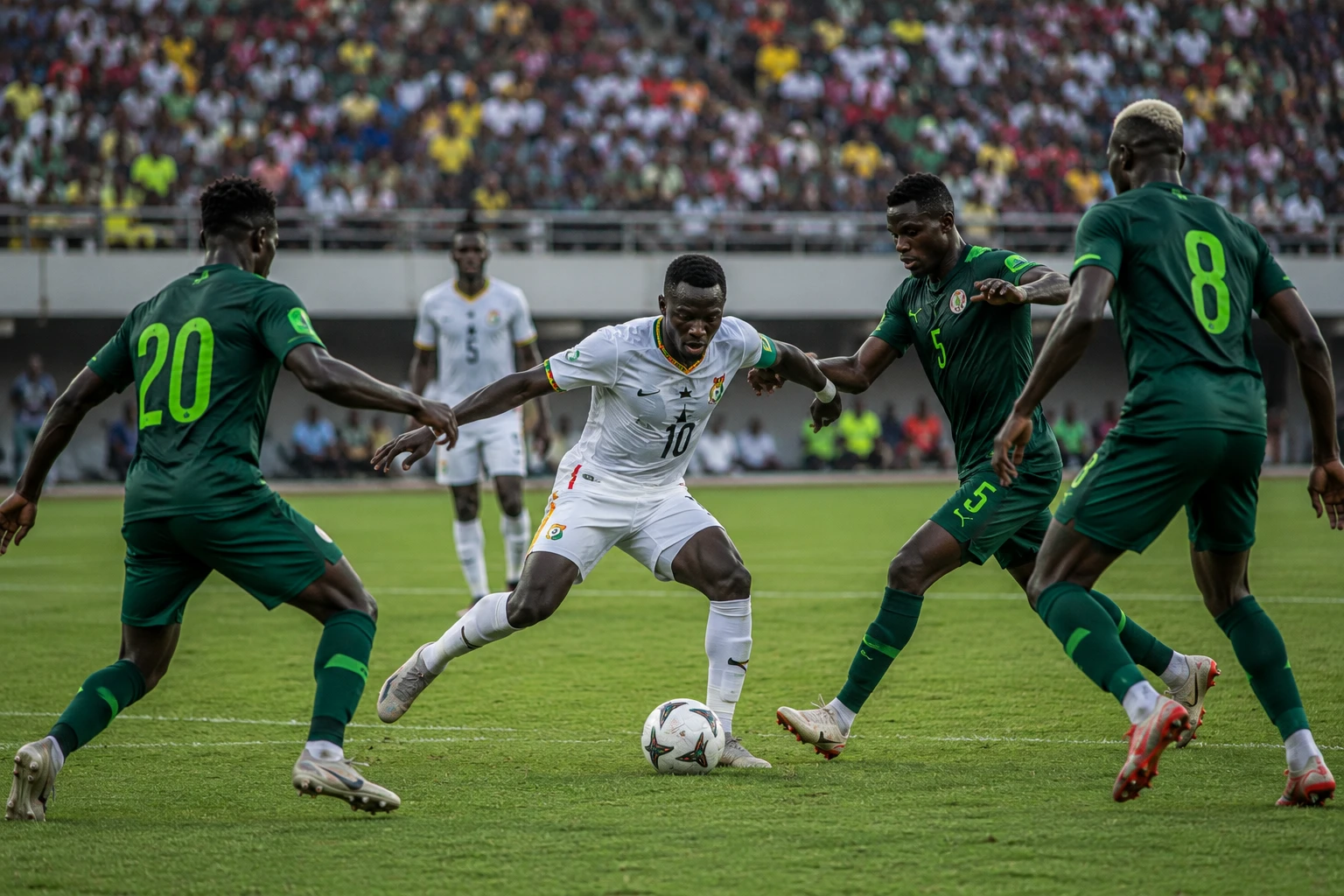
Alt: Football players competing for possession
West African football has entered a new competitive cycle. Established teams still command respect, but the 2026 World Cup showed that reputation alone does not determine how far a side can progress.
On mobile, supporters may move between team news, match statistics and live casino games during tournament days. Football analysis within that routine centers on confirmed line-ups, current form, squad depth and recent results.
Ghana, Cabo Verde, Senegal and Côte d’Ivoire all reached the Round of 32 at the 2026 World Cup, but none advanced further. Ghana lost 1-0 to Colombia, Côte d’Ivoire fell 2-1 to Norway, while Cabo Verde and Senegal were eliminated after extra time by Argentina and Belgium respectively. These results highlighted both the progress and the remaining challenges facing the region’s leading teams.
Those results renewed the discussion about regional leadership. Historical status remains relevant, but tactical structure, player availability and squad continuity now provide a clearer basis for comparison.
Recent results have redrawn the regional order
Tournament football exposes weaknesses that qualifying campaigns can hide. One poor match may end a campaign, but repeated problems usually reveal deeper issues.
Cabo Verde delivered the region’s clearest surprise in 2026. The debutants drew with Spain and later pushed Argentina into extra time. Their run ended in a 3-2 defeat, yet the performance changed how analysts viewed the squad.
A country with roughly 500,000 residents produced a team capable of reaching the knockout stage. That achievement challenged the idea that population size defines football potential. Recruitment and tactical discipline mattered far more.
Ghana also reached the knockout rounds after returning to the global tournament. Mohammed Kudus had scored the goal against Comoros that secured qualification, but injury prevented him from taking part in the finals.
Without Kudus, other attacking players assumed greater responsibility. Ghana progressed from the group stage before losing 1-0 to Colombia, showing competitive strength but also leaving questions about control in decisive matches.
Senegal produced a more complicated story. The squad entered the tournament with experience and strong expectations. It also became the first African team to score five goals in a World Cup match.
An early knockout exit still raised questions about consistency and game management. It also increased pressure on the next leadership group.
Côte d’Ivoire followed a similar path. The team offered physical power, technical quality, and recent continental authority. Norway eliminated it in the round of 32.
That result did not erase its strengths. It showed how small tactical margins can change both results and market assessments.
Signals that matter more than reputation
A famous badge can shorten odds before the market studies the details. Experienced bettors must separate brand value from competitive evidence.
- Squad depth matters during congested tournaments. Injuries, suspensions, and fatigue expose teams with weak replacement options.
- Tactical continuity improves forecasting. Stable roles create clearer patterns in pressing, chance creation, and late-game decisions.
- Player development supports long-term value. Strong pathways help teams replace ageing leaders without starting again.
These signals work best together. A talented starting eleven may struggle without a reliable bench. An inexperienced squad can also underperform when tactical duties remain unclear.
The strongest future leader will combine depth, structure, and competitive experience. That combination usually produces more reliable betting data.
Regional competition has also encouraged a more analytical betting approach. Experienced bettors increasingly study squad updates, tactical trends, and performance metrics before evaluating odds. Many also compare sportsbook features, including welcome bonus rules, alongside market depth and payment options.
Senegal still sets the regional standard
Senegal remains the region’s main reference point despite its disappointing exit. The federation has built a strong senior side and a dependable talent pipeline.
Many players compete in demanding club setting. They understand physical matches, fast transitions, and tournament pressure.
Sadio Mané still provides authority, but the next cycle cannot depend on one established figure. Pape Matar Sarr offers energy and progression in midfield. Nicolas Jackson gives the attack pace and movement.
Other players must now turn club quality into stable international performances. The team’s long-term success will depend on how quickly the next generation assumes greater responsibility.
The main analytical question concerns how Senegal manages its transition. Senegal often attracts short prices because of its reputation and squad strength. Those prices become less attractive when the midfield loses control or the attack wastes chances.
Bettors should monitor team selection, pressing intensity, and shot quality. The badge may remain strong even when the performance indicators weaken.
Ghana has talent but needs greater control
Mohammed Kudus played an important role in the qualification campaign and scored the goal against Comoros that secured Ghana’s World Cup place. He did not take part in the finals, however, after missing the squad because of injury.
That absence required other attacking players to assume more responsibility. Ernest Nuamah returned in time to join the tournament squad, while Ghana progressed from the group stage before losing 1-0 to Colombia in the Round of 32.
The wider challenge lies in controlling matches without losing attacking sharpness. Open contests can create opportunities, but they also test defensive positioning and midfield balance. Ghana’s next cycle will therefore depend on squad availability, tactical continuity and the ability to protect narrow advantages.
Côte d’Ivoire has deep rebuilding potential
Côte d’Ivoire combines athletic power with players developed inside elite club systems. Simon Adingra gives the team width, acceleration, and one-against-one threat.
The squad also contains midfielders and defenders comfortable with physically demanding matches. Few regional teams can match its options across every area.
Squad depth allows tactical changes and can complicate betting analysis because starting roles may shift between matches.
The team needs a clearer identity during difficult periods. Strong squads sometimes rely too heavily on individual moments. Possession can become predictable when those moments disappear.
Bettors should study how Côte d’Ivoire creates chances against compact defences. Open matches reveal talent, but organised opponents reveal tactical maturity.
Cabo Verde has become more than an outsider
Cabo Verde now deserves serious attention rather than novelty status. Its World Cup campaign showed discipline, confidence, and belief against stronger names.
Kevin Pina gave the midfield balance and physical presence. Goalkeeper Vozinha also became one of the tournament’s memorable performers.
The diaspora network remains a valuable competitive tool. It widens the player pool and connects the national team with different football systems.
Strong recruitment can offset limited domestic resources.
The betting market may adjust slowly after a breakthrough. That delay can produce value when performance data supports the result.
Rankings cannot replace detailed analysis. They can still show whether progress continues beyond one successful tournament.
Talent alone does not guarantee success
Several teams in the region possess players who perform at the highest levels of club football. Strong attacking options, however, do not automatically translate into international success.
Qualification campaigns and major tournaments often expose weaknesses in midfield balance, defensive organisation, and tactical consistency. Teams that rely too heavily on individual talent can struggle when facing well-structured opponents.
Club form does not always transfer directly to international football. Team chemistry, preparation time, and tactical discipline often play a greater role than individual reputation.
What the next cycle could reveal
Regional leadership will not belong permanently to one team. Senegal still owns the strongest recent body of work. Côte d’Ivoire carries deep squad potential.
Several contenders have the talent and organisational structure required to challenge for regional leadership over the coming years.
The next tournaments will reward evidence over reputation. Analysts should watch how these teams face compact opponents, protect late leads and rotate their squads.
Those situations reveal more than highlight reels or famous names. The next West African leader will earn its position through repeatable performance, not one dramatic result.
Click to signup for FREE news updates, latest information and hottest gists everyday
Advertise on NigerianEye.com to reach thousands of our daily users
No comments
Post a Comment
Kindly drop a comment below.
(Comments are moderated. Clean comments will be approved immediately)
Advert Enquires - Reach out to us at NigerianEye@gmail.com